Interactive simulation
The double pendulum
Hang one pendulum from the end of another and you get one of the simplest chaotic systems you can build in a workshop. Here there are hundreds of pendulums whose starting angles differ by a hundred-thousandth of a radian: at first they move as one, then they open up like a fan of colors. With little energy (small swing) the motion is regular and the swarm doesn’t spread out: chaos needs enough energy.
More simulations
Keep exploring: each system shows a different face of chaos.
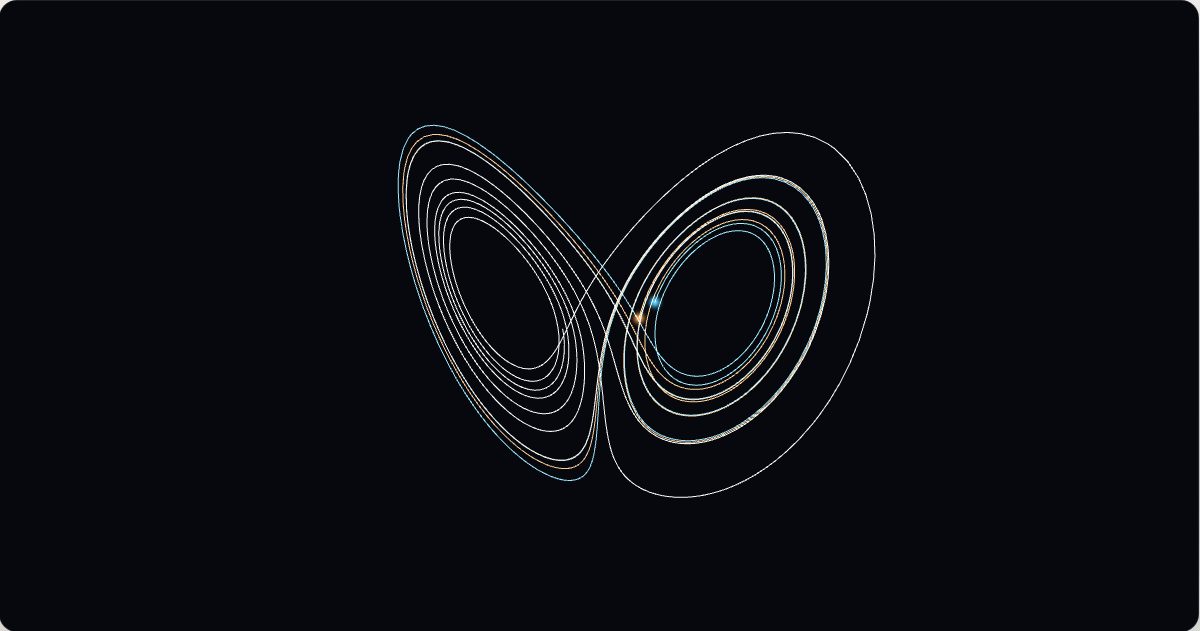
The Lorenz attractor and other strange attractors in 3D
Lorenz, Rössler, Aizawa, Thomas and Halvorsen in 3D, with the butterfly effect measured live.
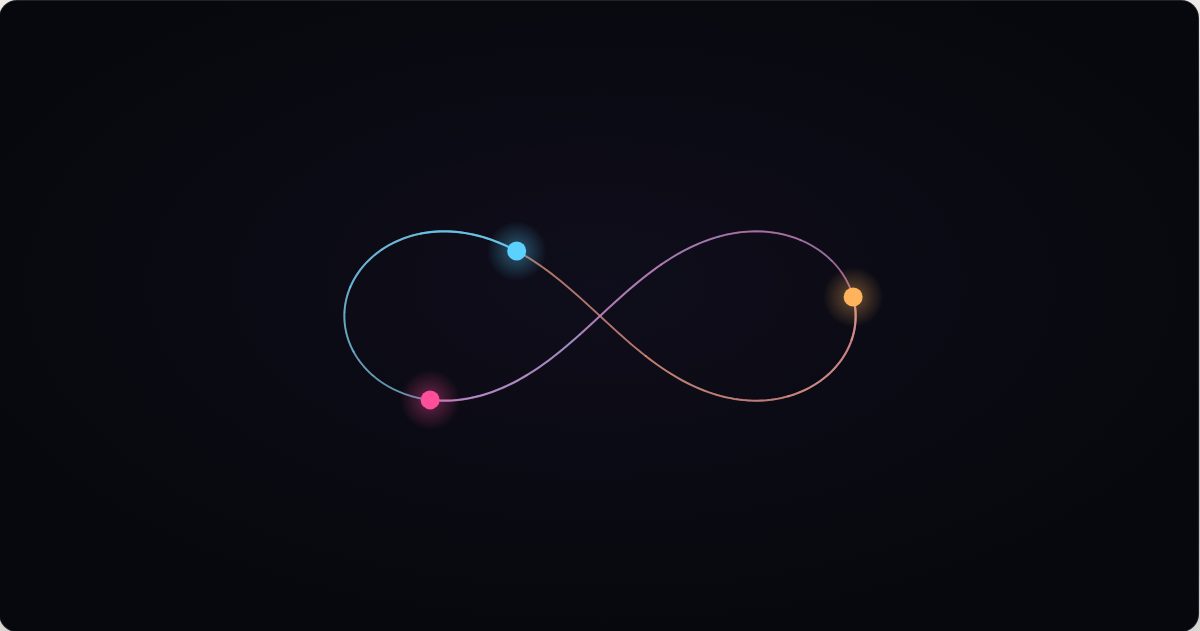
The three-body problem
Three bodies bound by gravity: exact choreographies and chaotic dances, with a twin system that gives the chaos away.
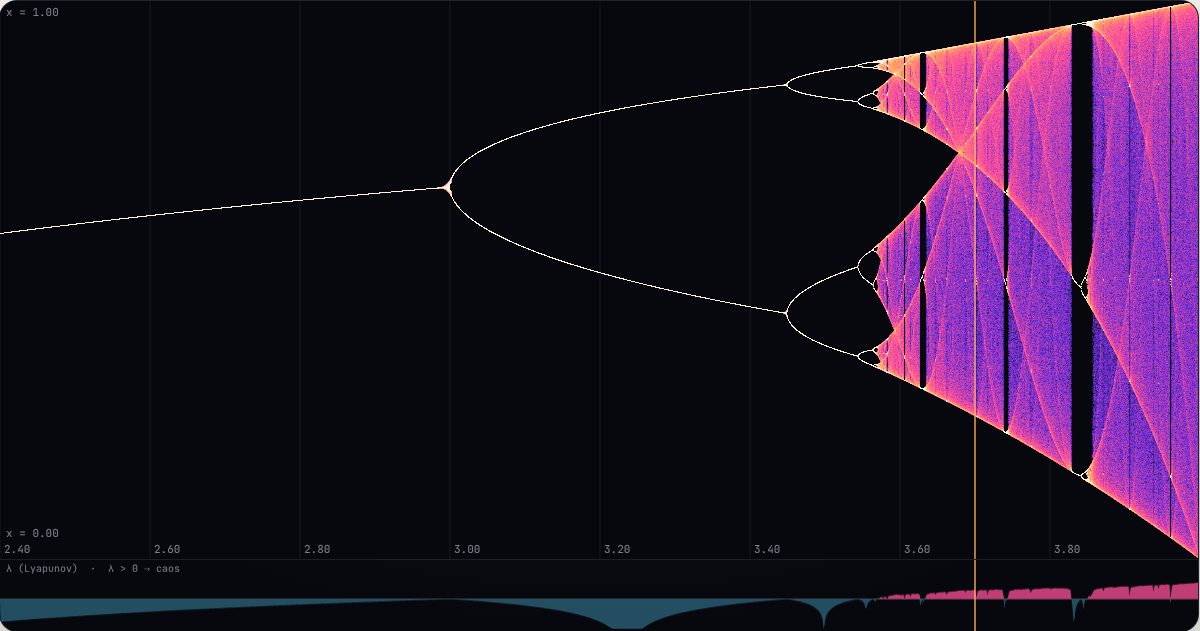
The logistic map: the route to chaos
A zoomable bifurcation diagram, the Lyapunov exponent and the cobweb plot of a one-line equation.
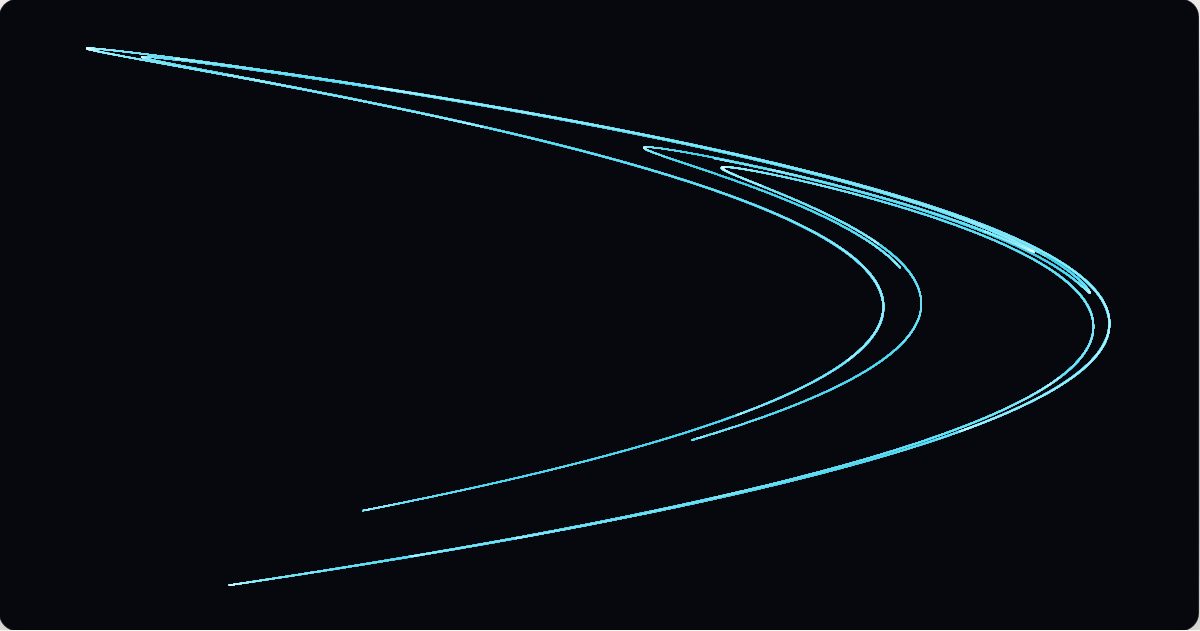
The Hénon map: a fractal in two lines
A horseshoe that, when you zoom in, turns out to be made of lines within lines, without end.

Strange attractors in the plane
Two lines of trigonometry iterated millions of times: generative art you can download.
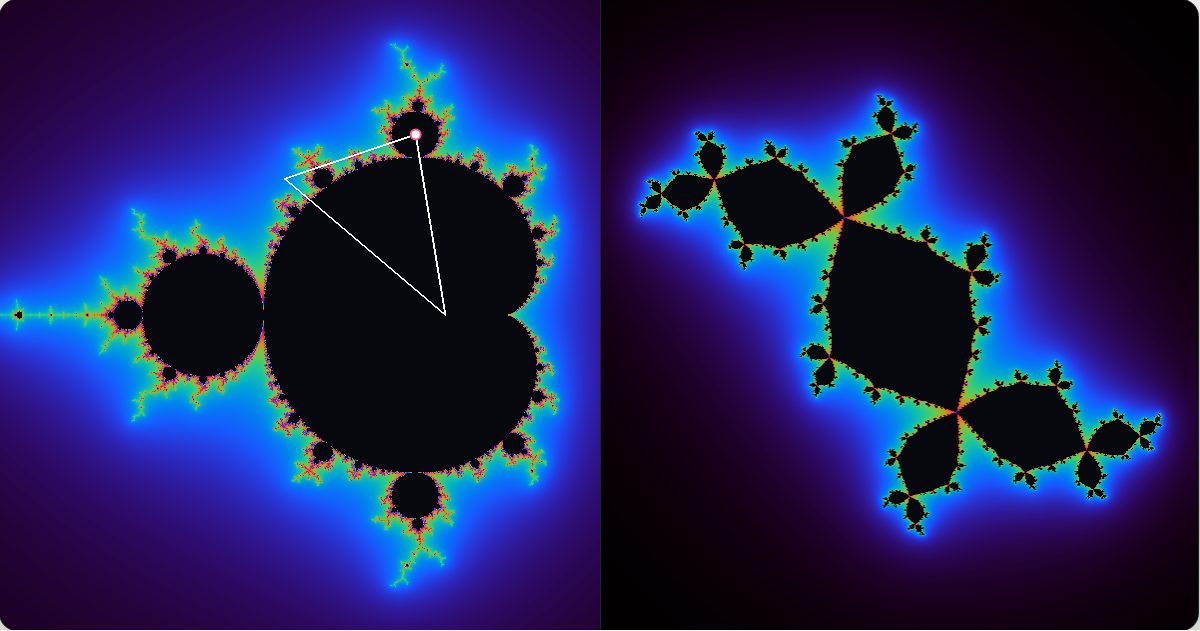
Mandelbrot and Julia: the edge of chaos
The two sets linked together: point at a spot in the Mandelbrot set and its Julia set appears.
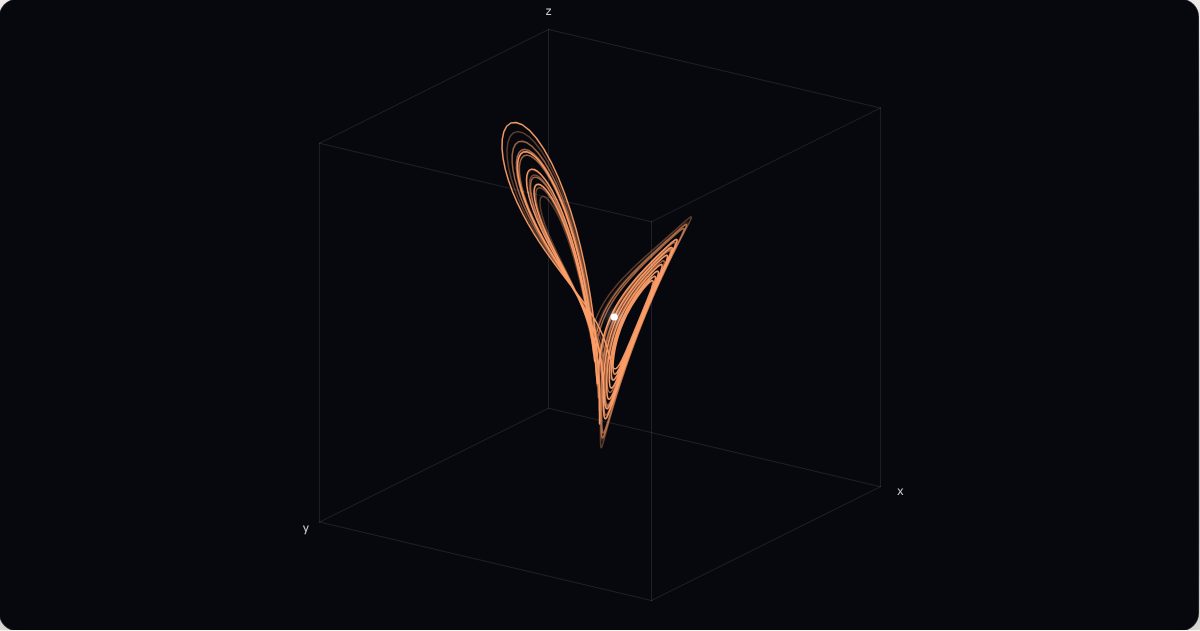
Lab: build your own simulation
Write your own equations, tune the parameters and share the result with a link.